Universal Pictures
Contains spoilers for “The Odyssey”
Christopher Nolan’s adaptation of the epic Greek poem “The Odyssey,” attributed to Homer and a staple of high school syllabi, is finally here … so what does it all mean? What happens in Nolan’s latest epic masterpiece — a follow-up to another ode to man’s power and hubris, “Oppenheimer,” which won Nolan his first directing Oscar — and what is he saying with this movie’s unbelievable conclusion?
First things first. We say “The Odyssey” is attributed to Homer because, truthfully, scholars aren’t united regarding Homer’s existence or direct authorship of the epic poem. Even though this poem is decidedly complex, was originally written in ancient Greek, and has been translated many different ways by many different people, it lends itself perfectly to an adaptation because of its ancient origins: it is meant to be performed.
Beyond those basics, Nolan brought back some regular collaborators for this project — Anne Hathaway, Matt Damon, James Remar, Elliot Page, Robert Pattinson, and Benny Safdie, who play Penelope, Odysseus, Tiresias, Sinon, Antinuous, and Agamemnon, respectively — and introduced some new faces to the cast. Lupita Nyong’o appears briefly but meaningfully as Helen of Troy and her twin sister Clytemnestra, Zendaya portrays the Greek goddess of wisdom Athena, John Leguizamo plays a loyal blind swineherd named Eumaeus, and Tom Holland has a pivotal role as Telemachus, Penelope and Odysseus’ nearly-grown son desperate to find his father. Nolan is also joined behind the camera by his wife and co-producer, Emma Thomas, his cinematographer Hoyte van Hoytema, and his composer Ludwig Göransson, the latter two of whom worked on “Oppenheimer” — and who, frankly, should clear off their shelves and make room for more Oscars. With that all said, here’s everything you need to know about the story and ending of Christopher Nolan’s “The Odyssey.”
What you need to remember about the plot of The Odyssey
Universal Pictures
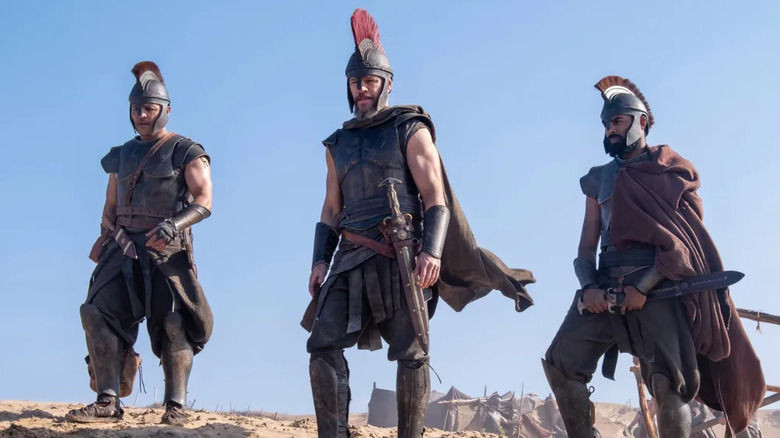
Christopher Nolan’s adaptation of “The Odyssey” uses flashbacks and storytelling to weave its complex narrative together, so it’s tough to chart everything chronologically; instead, the narrative begins after Odysseus has been missing for eight years when he failed to return home to Ithaca from the Trojan War. Even though Agamemnon, the leader of the Acheans, returned home safely, Odyseeus remains missing for nearly a decade, leaving his wife Penelope and son Telemachus in a state of limbo. Penelope, meanwhile, is forced to endure a ton of suitors vying for her hand and, by extension, the throne of Ithaca; Antinuous and his cohort Polybus (Corey Hawkins) are among the most insidious, tormenting Telemachus, Eumaeus, and even Odysseus’ elderly hunting dog Argos for sport.
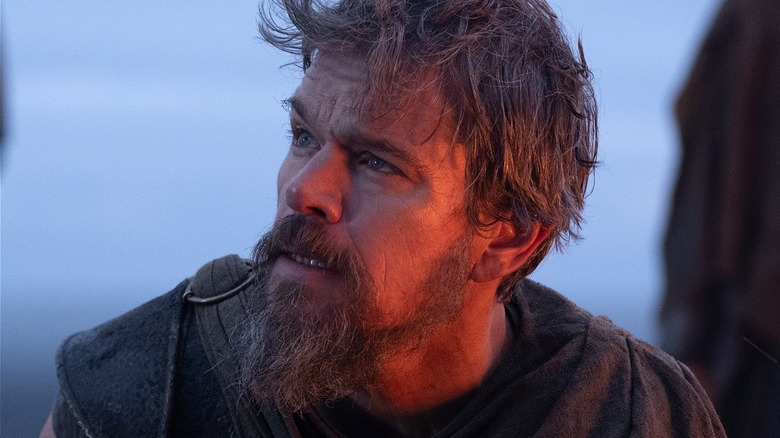
So where is Odysseus? A remote beach on the island of Ogygia with Calypso (Charlize Theron), a nymph who tries to soothe his troubled mind by feeding him lotus flowers to make him forget his past. Feeling understandably guilty, Calypso withholds the flowers and forces him to remember his wife and son in Ithaca and precisely what happened to his cadre of men that followed him “home” after they won the Trojan war. Instead of following Agamemnon’s ships, Odysseus decides to see what he and his men find … and it’s horrifying.
Along the way, Odysseus’ men are killed by a hungry cyclops in his cave, lured to their death by a siren’s song, brutalized by the cannibal giants known as the Laestrygonians, and turned into swine by Circe (Samantha Morton), all while the vengeful god Poseidon sends storms to push his ship off course. Odysseus, thankfully, returns to Ithaca after consulting with Calypso … and apologizing to Poseidon for killing his son, the aforementioned cyclops Polyphemus.
What happens at the end of The Odyssey?
Universal Pictures
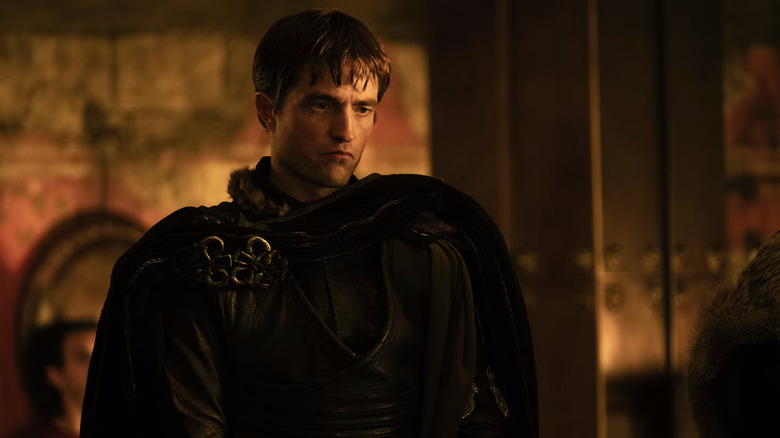
An important thing to note here, as we work up to the ending: in order to finish his journey and before he arrives alone on Ogygia and is nursed back to health by Calypso, Odysseus and his remaining men visit Hades, where they receive instructions for the remainder of their voyage from the wise man Tiresias. While there, he’s visited by dead figures who fought alongside him in Troy: specifically, Agamemnon, who warns Odysseus to tread carefully during his homecoming, and Sinon (Elliot Page), a faithful soldier who was tricked by Odysseus as he and his men tucked themselves into the Trojan horse to invade the city’s walls. Because Odysseus had to keep the secret from Sinon, Sinon was killed … and he wasn’t even supposed to be on the front lines anyway, but a cruel switcheroo from Antinous sent a younger Sinon into battle. Sinon’s dead figure chastises Odysseus for not sufficiently respecting or honoring the dead, and Odysseus promises to avenge him and do right by his fallen comrades.
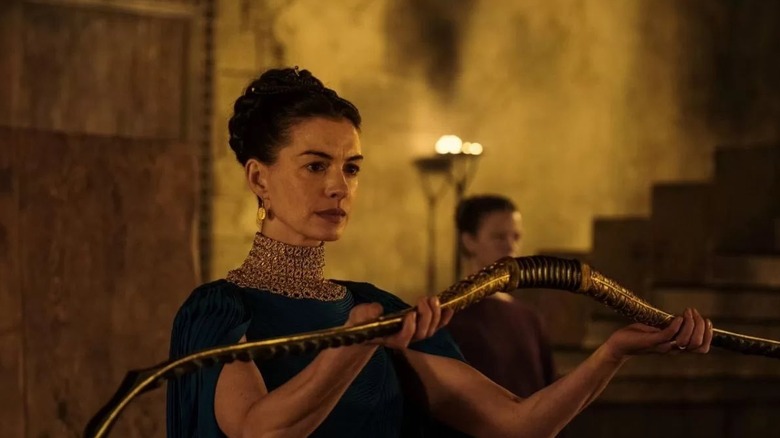
After leaving Calypso, Odysseus finds himself on an Ithacan beach, dresses as a humble and disheveled beggar, and learns, from his old friend Eumaeus — who cannot see and thus does not recognize him — that Telemachus will be attacked by Antinuous and the other suitors. Odysseus saves his only son, and the two arrange a banquet at Penelope’s palace where she asks would-be suitors to string Odysseus’ famed hunting bow. After Odysseus does it himself, he and Telemachus attack and kill the suitors, and Odysseus and Penelope set sail for the “unknown west,” leaving their son to rule after Odysseus uses a figure of Athena to prove that he really is Penelope’s long-lost husband.
What the end of The Odyssey means
Universal Pictures
Despite the fact that “The Odyssey” is an epic film on an absolutely grand and massive scale — complete with action setpieces that rank among the very best of Christopher Nolan’s entire career to date — some of its best moments are also its smallest. That includes Sinon’s interaction with Odysseus in hell, but it also refers to a quiet speech Odysseus gives through a screen door to his long-lost wife Penelope, who still believes he’s a mere beggar in need of assistance. As he recounts the sacking of Troy by Agamemnon, Odysseus, and their men, the absent hero finally reflects on the fact that, by winning the Trojan War, he and his men committed unforgivable brutalities and murdered innocents. Not only that, but throughout the film, characters discuss their fear of the “people from the sea,” and Odysseus finally realizes that he and his fellow soldiers were those terrors that could possibly disrupt the lives of civilians; in fact, in torching and destroying Troy to win the war, he and his men violated Zeus’s Law, which basically boils down to “treat others as you wish to be treated.”
This is the most interesting thing about Nolan’s approach to the source material of “The Odyssey” by far. Rather than let gods and magic run the show, Odysseus is forced to grapple with the consequences of his own decisions and actions, including shooting Polyphemus, getting his men lost, and even his war-winning attack on Troy. It’s Odysseus’ prior hubris that keeps him away from his family for eight long years — longer, actually, if you include the overall war itself! — recontextualizes the entire ordeal.
Christopher Nolan’s take on The Odyssey is in conversation with his previous work
Universal Pictures
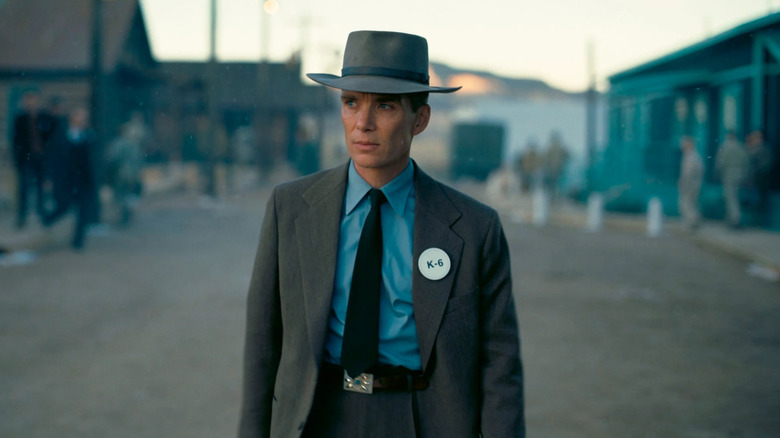
If “one man grapples with the larger consequences of his own actions” sounds like a theme Christopher Nolan has explored before, that’s because … he has. In his 2023 Oscar-winning biopic “Oppenheimer,” Nolan investigates the mind of J. Robert Oppenheimer (Cillian Murphy, who also won an Oscar for the role), the famous theoretical physicist whose work in the Los Alamos laboratory during World War II helped create the nuclear atomic bombs that the United States subsequently used on two Japanese cities: Hiroshima and Nagasaki. (As a reminder and as of this writing, the United States remains the only major power to ever use a nuclear weapon during wartime, which makes Nolan’s portrait of this brilliant but conflicted man all the more striking.)
As “The Odyssey” draws to a close and Odysseus regains all of his memories, he remembers watching Troy burn, knowing it’s only because he and his men utilized the Trojan horse and snuck into the city while its defenses were down. Something similar happens in “Oppenheimer” during a striking and horrifying sequence where, while giving a “victorious” speech about the bombings and envisions every person in the room being ravaged by the very weapons he created. When Odysseus opines to Penelope that, in breaking Zeus’s Law, he and his men made it acceptable for everyone to go against the basic tenets of society, it’s quite reminiscent of Oppenheimer worrying to Albert Einstein (Tom Conti), at the end of his eponymous film, that the ruined world they feared may now only exist because he invented weapons of death.
Christopher Nolan’s Batman trilogy was a surprising influence on The Odyssey
Warner Bros.
Before the release of “The Odyssey,” Christopher Nolan talked to USA Today and explained why he chose to take on this audacious adaptation, pointing to his fond memories of reading the ancient poem in his younger years. Not only that, but he also linked this project to “Oppenheimer,” making it clear that he was influenced by his own work. As he put it:
“Coming out of ‘Oppenheimer,’ I had a funny combination of despair and optimism. That film was almost a horror film for me. It was a very disturbing subject to live with for a couple of years: thinking nonstop about nuclear war and what humans bring to the table. I was quite glad to move out of that. But when you see ‘The Odyssey,’ you start to realize that I didn’t quite manage to escape it.”
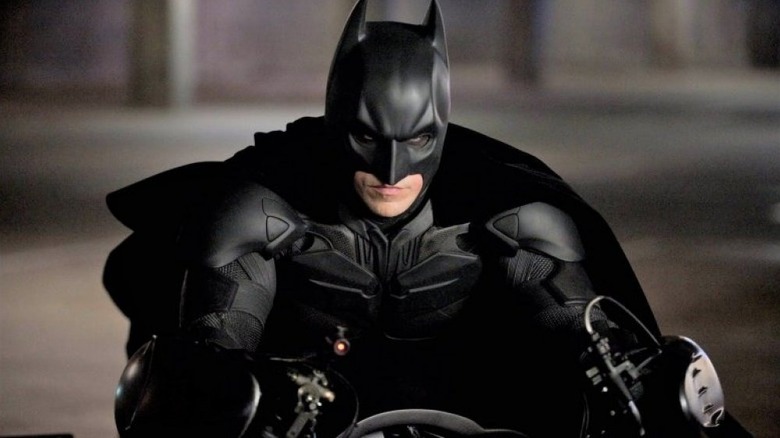
Beyond that, though, Nolan tried to balance the “larger than life” and “iconic” feeling of a character like Odysseus and make him a fully realized person … something he notes he did previously in his Batman films. “Those three films were a continual experiment in trying to be human, and coming to ‘The Odyssey,’ it’s that same balance,” he noted. “On the surface, I didn’t think there’d be much of a relationship, but what I learned doing the ‘Dark Knight’ films really helped with this.”
Nolan also pointed to Martin Scorsese’s “The Last Temptation of Christ” as an influence — “There were technical things that Scorsese was doing that were quite inspiring, but more than that, the figure of Jesus and what he does with him was very, very challenging to the audience” — but it’s genuinely cool that he was able to learn from his own body of work as well.
Will there be a sequel to The Odyssey?
Universal Pictures
No, probably not. Christopher Nolan, first and foremost, isn’t in the sequel business with the obvious exception of his Dark Knight trilogy, which was intended as a three-part series; there’s a reason he never made, say, “Inception 2” or “Interstellar 2.” Nolan seems to enjoy a closed loop, which is precisely what “The Odyssey” is.
Plus, when it comes to the source material … that’s it! Certainly, if Nolan wanted to make a different movie that takes place in the world of Greek mythology, that’s not out of the realm of possibility — but if we’re betting, the odds feel slim as far as that idea goes. When it comes to a “direct” sequel to “The Odyssey,” you can leave the theater in peace knowing that the epic story of Odysseus has come to an end and you won’t have to return to the theater to see, say, a Telemachus-based sequel (or, god forbid, a cyclops or Circe prequel).
“The Odyssey” is in theaters now.