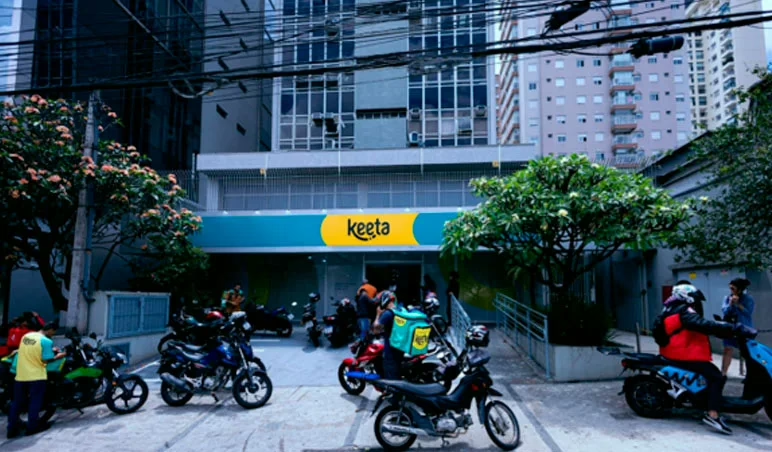
The food delivery industry has transformed dramatically over the past decade. What began as a convenient way to order meals has evolved into a highly competitive market driven by technology, customer experience, and innovation. Among the companies leading this transformation, Meituan stands out as one of the most influential players. Rather than operating as a simple delivery platform, it has built an entire ecosystem that is reshaping how consumers interact with digital services.
Today, businesses around the world are studying Meituan to understand how its strategies can influence the future of every food delivery app. From artificial intelligence to integrated lifestyle services, the company’s approach offers valuable insights into where the industry is heading.
The Evolution of Food Delivery
Food delivery has become an essential part of modern life. Busy professionals, students, and families increasingly rely on mobile applications to order meals quickly and conveniently. As customer expectations continue to rise, companies must offer more than fast deliveries to remain competitive.
Consumers now expect personalized recommendations, seamless payment options, real-time tracking, and exceptional customer service. Meeting these expectations requires constant technological innovation, and this is where Meituan has established itself as a market leader.
More Than Just a Delivery Platform
Unlike traditional delivery companies that focus solely on restaurants, Meituan has expanded into a complete digital ecosystem. Users can access food delivery, grocery shopping, hotel reservations, travel bookings, entertainment tickets, bike-sharing services, and much more all from a single application.
This “super app” strategy creates a convenient experience where customers rarely need to leave the platform. By connecting multiple everyday services, the company keeps users engaged while creating additional revenue opportunities.
This broader vision demonstrates that the future of a successful food delivery app may involve becoming an all-in-one lifestyle platform rather than remaining limited to restaurant deliveries.
Artificial Intelligence Is Driving Innovation
Artificial intelligence has become one of the biggest competitive advantages in food delivery. Companies now analyze millions of data points every day to improve operations and customer satisfaction.
Meituan uses AI in several important ways:
- Personalized restaurant recommendations
- Smarter delivery route optimization
- Demand forecasting
- Dynamic pricing
- Fraud detection
- Customer support automation
By processing large amounts of customer and operational data, AI helps reduce delivery times while improving service quality for both restaurants and consumers.
As AI technology continues advancing, nearly every food delivery app will likely adopt similar intelligent systems to remain competitive.
Building an Integrated Customer Experience
One of the biggest lessons businesses can learn is the importance of creating a seamless customer journey.
Rather than encouraging users to download multiple applications for different tasks, Meituan allows them to complete numerous daily activities within one platform. This convenience strengthens customer loyalty because users become accustomed to relying on a single ecosystem.
For example, someone ordering lunch may also purchase groceries for dinner, reserve a hotel for an upcoming trip, or buy movie tickets all without leaving the app.
This level of integration creates a stronger relationship between customers and the platform while increasing overall engagement.
Technology Is Changing Delivery Operations
Behind every successful delivery platform lies a sophisticated logistics system. Efficient route planning, driver management, inventory coordination, and order tracking all contribute to faster deliveries.
Meituan continuously invests in advanced technologies to optimize these operations. Machine learning algorithms predict demand, helping restaurants prepare for busy periods while ensuring enough delivery partners are available.
Automation also improves efficiency by minimizing delivery delays and reducing operational costs.
Future delivery platforms are expected to become even smarter through robotics, autonomous vehicles, and drone delivery systems as these technologies mature.
Creating New Revenue Opportunities
Traditional food delivery companies primarily generate revenue through delivery fees and restaurant commissions. However, expanding into additional services creates multiple income streams.
The ecosystem developed by Meituan allows the company to generate revenue from:
- Grocery delivery
- Travel services
- Hotel bookings
- Local experiences
- Advertising
- Financial services
- Digital payments
Diversification reduces dependence on any single business segment while strengthening long-term sustainability.
Many companies are now exploring similar strategies to expand beyond the traditional role of a food delivery app.
Challenges of Replicating the Model

Although the super app approach has proven highly successful in China, replicating it internationally presents several challenges.
Different countries have unique consumer behaviors, regulations, payment systems, and competitive landscapes. Markets with established ride-hailing, grocery, and payment platforms may make it difficult for one company to integrate every service under a single application.
Building such an ecosystem also requires significant investment in technology, logistics, partnerships, and infrastructure.
For many businesses, gradual expansion may be more realistic than attempting to launch multiple services simultaneously.
Lessons for the Global Industry
Companies worldwide can learn several valuable lessons from Meituan:
- Focus on long-term customer relationships instead of one-time transactions.
- Invest heavily in artificial intelligence and data analytics.
- Expand services gradually based on customer needs.
- Build strong partnerships with restaurants and local businesses.
- Prioritize user experience at every stage of the ordering process.
These principles apply regardless of market size and can help delivery platforms remain competitive as customer expectations continue evolving.
The Future of Food Delivery Apps
The future of digital delivery extends far beyond transporting meals from restaurants to customers. Consumers increasingly expect personalized experiences, integrated services, fast deliveries, secure payments, and intelligent recommendations.
As technology advances, successful platforms will likely combine food ordering with groceries, retail shopping, financial services, entertainment, and local experiences. Artificial intelligence will continue improving delivery efficiency while creating highly personalized customer journeys.
Companies that embrace innovation while remaining focused on convenience will be best positioned for long-term success.
Conclusion
The rise of Meituan demonstrates that the future of digital commerce lies in integration, innovation, and customer-centric design. By combining advanced technology with a broad ecosystem of everyday services, the company has redefined what a delivery platform can become.
As competition intensifies across global markets, every food delivery app can benefit from adopting similar principles leveraging AI, improving logistics, expanding thoughtfully, and delivering a seamless customer experience. While not every business will become a super app, those that continuously innovate will shape the next generation of food delivery and digital convenience.